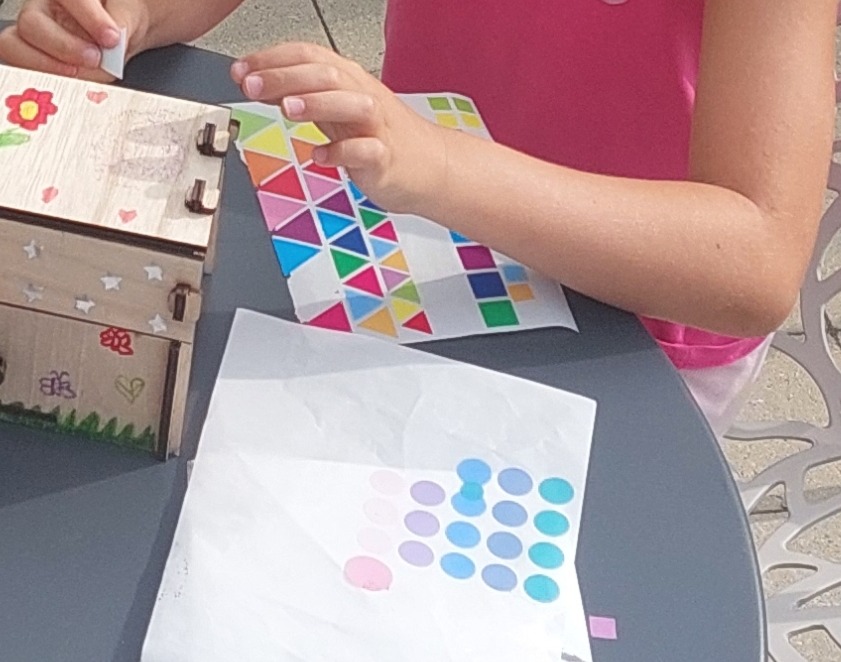
“Why do I need to move schools? I like my school.”
That’s what V., my seven-year-old, asked me when we told her she’d be starting at a local primary school in January. It’s a fair question, and one we’ve asked ourselves many times. So here’s our honest answer, including the parts we’re still unsure about.
Why we’re switching
We’ve been open and honest with V. about it: the main reason is money.
We can afford her international school, but it’s roughly ten times the price of a local school. And it comes straight out of our own pockets. Many people assume families like ours have school fees covered by an employer, but those expat packages are far less common these days. We moved to Malaysia on a local contract, and the same goes for Singapore. And right now, it’s only V. who’s in international school. We have three kids. Do the math.
That made us ask a harder question: is it worth it? Does paying $40,000 a year actually give her more than a local school would? It’s why we chose a mid-range international school over the most expensive ones in Singapore. We looked at the gymnastics halls and the award-winning debate teams and thought: does a five-year-old really need that?
There are other reasons too. International schools have a lot of turnover. V. makes best friends, and then the next year those friends move to another country. That’s hard on a little girl, again and again.
And Singapore’s school system is known around the world for its quality. We’ve lived here for ten years. It feels like we should at least give it a try.
The math, honestly
International school costs us around $40,000 a year, paid over ten months. As PRs, local school fees are around $340 a month, so roughly $4,000 a year.
Of course local school won’t be the only cost. We’ll need add Mandarin tuition, and probably some activities to keep her creativity going. Even if we budget $1,000 a month for extras, local school comes to about $16,000 a year. That’s still less than half of what we pay now, for one child. With three, the difference is enormous.
A day in the life: now vs. soon
At her international school, V.’s day runs from about 8 or 8.30am to 4pm. There’s a 30-minute morning snack break and a proper lunch break of around 45 minutes to an hour, with time to eat and play.
A friend’s P3 timetable at a local school looks very different. Lessons start at 7.45am and end at 1.30pm, in 30-minute blocks, with one 30-minute recess around 9.30am. That recess is when most kids eat, so a proper lunch waits until they’re home.
That means breakfast before 7am, a quick canteen meal mid-morning, and a hungry girl at 1.30pm. It also means a whole afternoon to fill. For many local families that’s student care, CCA, tuition or enrichment, or time at home. We’re still figuring out what it will look like for us.
Catching up on Mandarin
What struck me most is how much Mandarin is in the week. On my friend’s P3 timetable, it’s around four and a half hours a week, almost every day and often back-to-back. At V.’s international school, it’s two 45-minute lessons.
V. actually had a good start. She went to an English-Mandarin bilingual preschool until K2. But since moving to international school, where the level is lower, I feel her Mandarin has gone backwards. So we’re now doing one-to-one Mandarin tuition at home twice a week, to rebuild her understanding before January.
The good news is that she really likes her teacher. But she finds it tiring, and she complains about the homework. Recently she asked me: why do I need to study so hard now, when I’m doing fine at my school? It’s a fair question from a seven-year-old, and honestly, one I’ve asked myself too.
What we’re worried about
V. is a very curious girl. She loves finding out how things work, she loves being creative, and she asks questions about everything. Her international school gives her lots of room for that.
My biggest fear is that she’ll lose some of it in a more structured, exam-focused system. I honestly don’t know yet if that fear is fair. Local schools do have art, music and CCAs, and some of the best curiosity happens outside the classroom anyway. With school finishing at 1.30pm, her afternoons could become the place where she tinkers, builds, makes and asks her endless questions.
But I’d be lying if I said I wasn’t nervous. Ask me again in six months.
So, is it the right choice?
We don’t know yet. What we do know is that we’ve thought it through, we’ve been honest with V., and we’re not closing any doors. If local school doesn’t work for her, we’ll figure out the next step. But after ten years in Singapore, it feels right to at least try the system so many families here grow up in.
Almost local, one step closer. 💛


Leave a comment