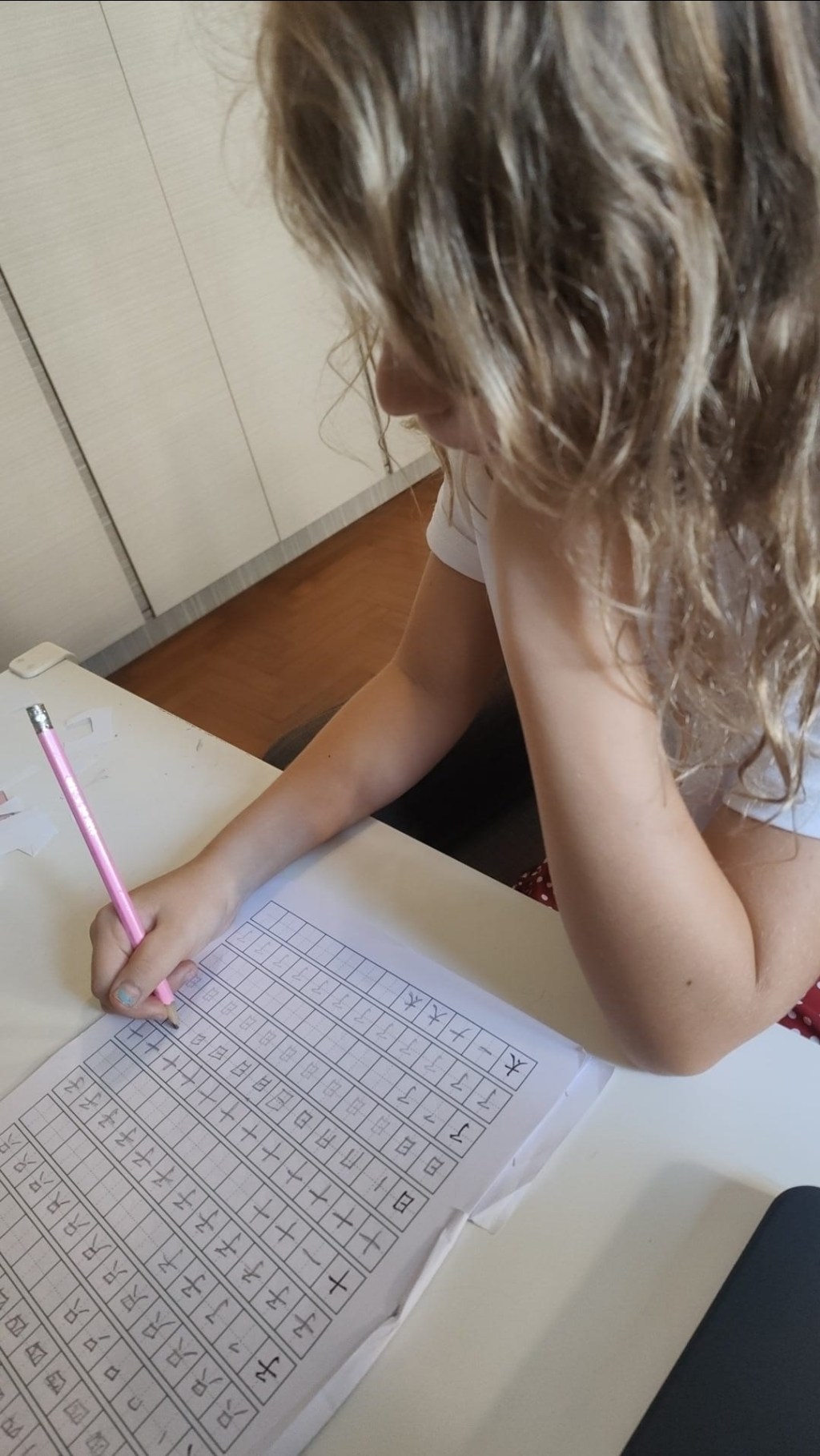
This week, thousands of 12-year-olds across Singapore are sitting their PSLE. My clients have been telling me about the quiet households, the last-minute revision and the nerves (theirs and their kids’). It took me straight back to my own version of this moment: the Cito toets.
Two countries, same age, same big question
Growing up in the Netherlands, the Cito toets in groep 8, the last year of primary school, when you’re 11 or 12, felt enormous. Together with your teacher’s advice, it helped decide whether you went to vmbo, havo, vwo or gymnasium. That, in turn, shaped whether you’d head to university or take a longer route through vocational training first. Sound familiar? The PSLE does a similar job here: sorting kids into secondary schools at around the same age.
My own Cito didn’t go to plan. I was quite sick around exam time and ended up doing the resit on my own, outside the classroom. Looking back, I sometimes wonder whether it was nerves. That’s how big it felt at 12.
Both countries have softened things a bit since then. In the Netherlands, the teacher’s advice now leads, and the test (now called the doorstroomtoets) can only move a child up, never down. Singapore replaced the old T-score with Achievement Levels, and it has done away with Express and Normal streams in favour of subject-based banding. Both systems are trying to make one exam at 12 matter a little less.
The Dutch safety net
Where the countries really differ is in second chances. In the Netherlands, repeating a year (blijven zitten) is possible at any stage. It’s not something families take lightly, though. I remember my parents being very stressed about it being a possibility, and my mum even sent one of my sisters to summer school to make sure her grades came up. Still, the option exists. At the final exams you can resit a subject (herkansing), and if you fail altogether, you redo the exam year rather than having the door closed on you.
In Singapore, repeating a year is rare, especially in primary school. There are other routes later on, like polytechnic, but the PSLE feels much more like a one-shot moment.
The year I switched levels
You can also move between levels in the Netherlands, and I did. At vwo I studied hard. Dutch, history and cultural studies came easily, and economics was so-so. Maths, though, was really hard for me, and it gave me so much stress that in vwo 4 I decided to switch to havo 4.
Suddenly maths clicked. I went from scraping 5.5s to getting 8s and 9s. The difference? At vwo you were expected to figure out how to get from A to D by yourself. At havo, they showed you every step in between. Same girl, same brain, just a different way of teaching.
Maths wasn’t my only struggle. English was one of my worst subjects. In the Netherlands it’s taught as a foreign language, just like German or French, and I just didn’t understand the grammar. Having all three on the same day completely confused me. One teacher even told me to stick with Dutch and not bother aiming for anything in English.
Today I live in English. I coach in it, run my business in it, and I’ve written a book in it. I think that teacher would be quite surprised.
It taught me something I still think about as a mum: a level or a score says as much about how a child learns as about what they’re capable of.
The zesjescultuur
Then there’s the cultural piece. Dutch grades run from 1 to 10, and a 5.5 is a pass. Many Dutch students happily aim for a 6: enough to pass, no need for more. We even have a word for it, the zesjescultuur, the “sixes culture”. It reflects something very Dutch: doe maar normaal. Don’t stand out too much, and keep some time for the rest of life.
I’ll admit I was the opposite: the high achiever who always wanted more than a 6. So in some ways, Singapore’s culture feels familiar to me. Aiming high is expected here, tuition is normal, and effort is openly celebrated. Some of my clients have even taken a full year off work to support their child through P6. I can’t imagine a Dutch parent doing that for the Cito, and it says a lot about how much this exam means here.
Neither approach is simply better. The Dutch one can let kids coast; the Singaporean one can pile on pressure. But there’s a lot to learn from both.
Where I land as a mum
With V. about to join the local system, I’ve been thinking about this a lot. Here, English is the main language of teaching, something I could never have imagined in my Dutch classroom. I’d love my kids to have Singapore’s work ethic and a bit of that Dutch shrug: the sense that one exam doesn’t define you, and that there’s always another route. My maths grades and that English teacher are proof of that.
To every family in PSLE week: you’ve got this. And whatever the results, the story is far from finished. 💛


Leave a comment